
14 September 2026 · 4 min read
Cold Plunge Benefits: What the Science Actually Says
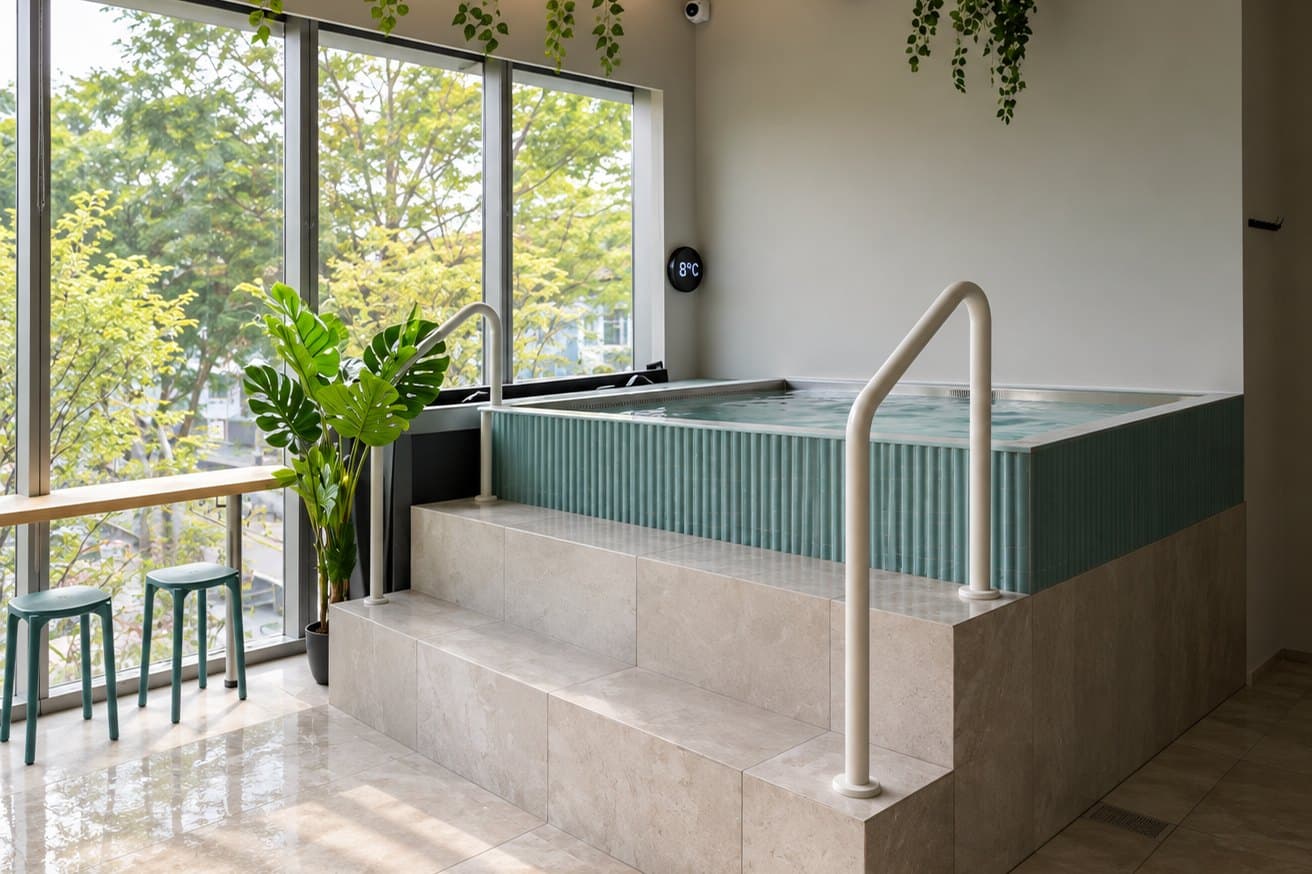
Cold plunge has gone from a niche Nordic ritual to one of the most requested recovery tools in Singapore, and for good reason. A short, controlled dip in cold water — typically 7°C to 12°C — triggers a chain of physiological responses that athletes, shift workers and everyday members alike have started building into their weekly routine.
Why cold plunge works even in a tropical climate
It might seem odd to seek out cold water in Singapore's heat, but the physiological response is the same wherever you are — what changes is how the rest of your day feels afterward. Many members tell us the contrast between Singapore's humidity outside and a controlled 7–12°C plunge inside is part of what makes the reset feel so distinct here.
What happens in your body
The moment you submerge, your blood vessels constrict, pushing blood toward your core to protect vital organs. Your body releases a surge of norepinephrine, the hormone behind that jolt of alertness you feel within seconds. Regular cold exposure has been linked to reduced inflammation and muscle soreness after exercise, which is why plenty of people plunge right after a workout.
That timing matters if your goal is building strength or muscle, though. Regular cold immersion straight after lifting may blunt some of those gains (Roberts et al., Journal of Physiology, 2015). If you're training for strength, wait a few hours after your workout, or plunge on a rest day instead — for general recovery and soreness, right after training is fine.
The mental reset
The mental effects are just as real as the physical ones. That norepinephrine spike doesn't just wake you up — studies on cold water immersion show measurable improvements in mood and focus that last well beyond the plunge itself. Plenty of members tell us their cold plunge is less about the physical recovery and more about the mental reset it gives them before a busy day, or a way to decompress after one.
Building cold tolerance safely
You don't need extreme cold or long sessions to get the benefit. Most people see results from 1 to 3 minutes at 7°C to 12°C, a few times a week. Going colder or longer isn't automatically better — consistency matters more than intensity, and easing in gradually is the safest way to build tolerance.
At Sochill, our cold plunge station offers two temperature options so members can build up gradually rather than being thrown into the deepest end on day one. No booking is required — walk in, sit with the discomfort for a minute, and notice how different the rest of your day feels.
Common questions
How long until it stops feeling so shocking? Most people notice the initial gasp response soften within the first two or three visits, and it keeps easing the more consistently you go. It rarely disappears entirely — and that jolt is part of what people come back for.
Should I breathe in a specific way? Slow, controlled exhales help more than holding your breath. Fighting the urge to gasp is normal at first; focusing on a steady exhale tends to settle it faster than trying to tense through it.
Can I cold plunge every day? Yes, as long as you're building up gradually and have no underlying conditions that need a doctor's sign-off first (see below). Many members do plunge daily; others prefer two or three times a week alongside sauna or hydrotherapy.
Check with your doctor first if you're pregnant, have a heart condition, high or low blood pressure, or Raynaud's, or take medication that affects your heart rate or blood pressure. Don't use the sauna or plunge after drinking alcohol. Leave straight away if you feel dizzy, numb or unwell.